
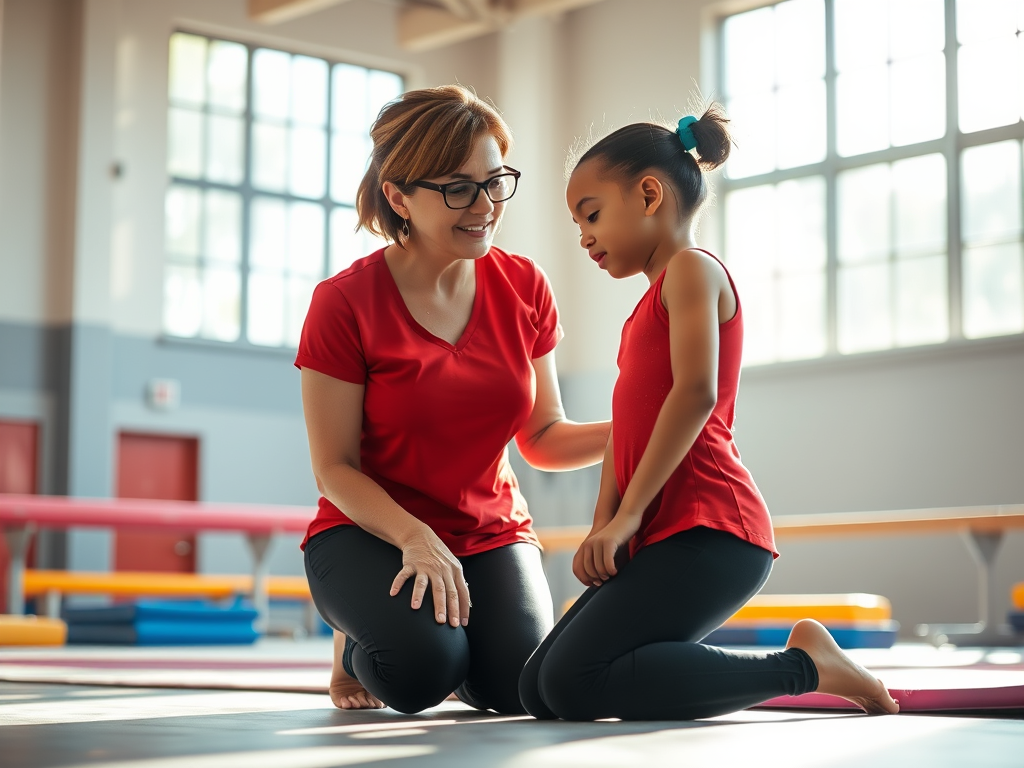
What Does It Really Mean to Be a Coach?
Coaching is often seen as simply teaching skills or perfecting technique, especially in a sport as demanding as gymnastics. But over time, I’ve learned coaching is so much more. It’s about connection, growth, and being a steady presence in moments when kids need it most. In this post, I want to share what coaching truly means to me. The lessons from my own journey as an athlete and the kind of coach I strive to be every day.
I never thought I’d be someone who liked to coach.
Standing in front of people and talking has been a huge fear of mine for as long as I can remember. But there’s something about coaching that hooked me and pulled me in.
Coaching isn’t just about what you teach your athletes, it’s about what they teach you. As a coach, you’re always learning. Especially in a sport like gymnastics, where even now, reliable information isn’t always easy to find online. The good news? It’s becoming easier every day.
Something I’ve learned over the years is that coaching is tons of fun if you let it be. When you open your mind and accept that you’re learning alongside your students, the sky is the limit. I’ve learned from coaches of all ages, 15 or 60, it doesn’t matter. If they love what they’re doing and are fully invested in growing not only their students but also themselves, that’s when you know you’re looking at a great coach.
Growing up, I went through a couple of coaches I don’t have fond memories of. I can still picture myself bawling my eyes out when a coach pushed me to try skills I wasn’t physically or mentally ready for. Instead of building me up and helping me work toward the goal, he would yell at me, sit me out, or leave me behind.
I have another memory of horribly spraining my ankle during conditioning. Rather than letting me ice it, my coach made me get back to work. Later that week, when I couldn’t hold a high relevé on that ankle, she corrected me to go higher. As I winced in pain, she finally looked down, noticed the swelling, and told me to ice it.
But I’m equally grateful for the coaches who showed me what coaching could be at its best. The ones who were always supportive, patient, and genuinely fun to be around. Coaches who celebrated the small victories with me, who listened when I struggled, and who made the gym feel like a safe place to grow, not just as an athlete, but as a person. They taught me that encouragement and kindness aren’t weaknesses but strengths, and that joy is a huge part of the journey.
Those experiences shaped me.. not because they built me, but because they showed me the kind of coach I never want to be, and the kind I strive to be every day. Gymnastics is a sport most of us only do in our adolescence. But mental health is forever. Feeling your worth is forever.
Coaching goes beyond teaching skills and drills to our gymnasts. It’s about building their confidence, talking them through the things they’re afraid of, making them feel seen, and adapting to their needs. It teaches them to follow directions and to be respectful. And It teaches you how to communicate with thought and intention.
Sure, we teach the “how-to” — the drills, the skills, the technical steps. But that’s the bare minimum. Coaching means:
- Helping kids believe in themselves when a skill feels impossible.
- Modeling resilience when things don’t go as planned.
- Creating an environment where students feel safe to try, fail, and try again.
- Meeting them where they are, and helping them take the next step forward, no matter how small.
- Adapting your approach to fit their needs, not just your plan.
When you’re enjoying yourself coaching, parents can tell. And when you’re not, they can tell, too. When you’re chatting it up with the coach next to you instead of focusing on helping kids get skills. When you’re not there to talk them through or spot them in those tough moments.. that’s when you’re missing the point.
You’re there to help them through those moments, one step at a time.
At the end of the day, coaching isn’t just about building better athletes. It’s about helping shape better people.
To all my fellow coaches — remember, the impact you make doesn’t end at the end of practice. The lessons you model and the energy you bring ripple out into every part of your athletes’ lives. Keep learning, keep teaching, and keep growing — because that’s what makes a great coach.
If you’re a coach, athlete, or parent, I’d love to hear what coaching means to you. Feel free to share your experiences or questions in the comments below. And if you want to read more of my thoughts and stories, check out my blog at www.opalbri.com. Together, we can build not just better athletes, but stronger, more confident people.



Leave a Reply